
On 4 May 2015, the training of students in the non-formal education activities “Programming” and “Remote School for Young Programmers” started. Students can choose between three programming languages: Python, C++ and Scratch. During the training, students learn to program in their chosen programming language and acquire the knowledge and skills needed in today’s information technology sector.
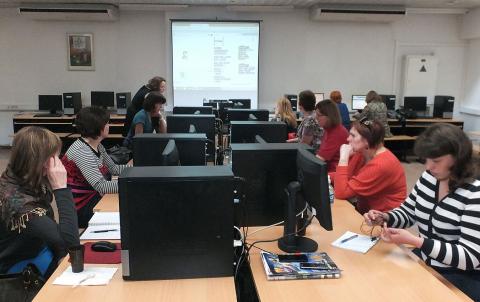
On 9 May 2015, the first training of teachers of the non-formal education activities “Programming” and “Remote School for Young Developers” took place for the second phase of the project “Attractive IT Innovations for the Future (PATINKA!)”. During the training, IT teachers were introduced to the programming language of their choice, as well as to the tools and instruments for developing applications. During the tasks, teachers were able to learn more about programming and consult with the trainer. Teachers were happy to share their experience, knowledge and advice on how to better solve the tasks, how to present the learning material to students and how to organise the learning process. At the end of the session, the teachers presented the tasks they had completed and received useful tips.
At the end of the first training session, the teachers thanked the trainers for their knowledge, advice, patience and time spent. The teachers found the training very useful and stimulating to acquire modern and innovative programming knowledge and skills.
The second training sessions of the non-formal education activities “Distance School for Young Programmers” and “Programming” will take place on 16 and 23 May 2015. Teachers of the “Distance School for Young Developers” will be trained on 16 May and teachers of “Programming” on 23 May. During these workshops, teachers will continue to learn about the programming languages Python, C++ and Scratch and will carry out creative final projects. The training will conclude with a graduation ceremony.